
I run two self-hosted AI agents. Nora runs on Hermes Agent and is my chief of staff; I talk to her every day. Alex runs on OpenClaw and manages a handful of personal projects; I check in with him once a week at most. Both live on the same kind of rented server, and both have broken on me.
If you are choosing between them, my answer is Hermes Agent, for most people. The reasons are less about features and more about what it is like to live with each one after the first week. This article covers setup, upkeep, memory, skills, cost and the failures, from my own logs.
Key Takeaways
- For a single founder or operator who wants a personal assistant, pick Hermes Agent. It was easier to keep running, it learned useful habits faster, and it costs less to host.
- OpenClaw was more expensive to set up and maintain, and its memory kept failing on me. I would not hand its setup to a non-technical person.
- Hermes is not maintenance-free. I still had to build my own memory layer, and a model change once led it to archive 57 of its 82 skills without asking.
- OpenClaw still makes sense if you want a large marketplace of ready-made skills, many messaging channels, or tight manual control over a multi-agent setup.
- Hosted agents from xAI (Grok Bot) and OpenAI (Dots) now remove the server work entirely, at a higher monthly price and with your data on their computers.
- Whichever you pick, budget for the upkeep, not just the install.
What Is the Difference Between Hermes Agent and OpenClaw?
Both are open-source AI agents you install on your own server and talk to through apps like Telegram. They connect to an AI model of your choice, remember things about you, and run tasks on a schedule.
They come at the job from different directions. OpenClaw is a gateway: a program that stays running, routes messages between channels and agents, and draws on a large community marketplace of skills called ClawHub. Hermes Agent, built by Nous Research, is a Python runtime that keeps its memory in a local database and writes its own skills from the work you give it (Firecrawl, 2026).
In plain terms, OpenClaw gives you more parts to assemble. Hermes gives you fewer parts and assembles some of them itself.
| Hermes Agent | OpenClaw | |
|---|---|---|
| Built by | Nous Research | Open-source community |
| Core idea | Learns skills from your work | Gateway for channels, agents and plugins |
| Skills | Writes and refines its own | Large marketplace (ClawHub), plus your own |
| My setup time | About 90 minutes (with OpenClaw experience) | About 2 hours, then a lot of debugging |
| My server today | About US$5 a month (Hetzner) | About US$7.50 a month (Hetzner) |
| Upkeep in my use | Occasional | Frequent |
| Voice (in my Telegram setup) | Turn-based voice notes, no live calls | Turn-based voice notes, no live calls |
| Best for | One person’s daily assistant | Multi-channel or multi-agent control |
Citation capsule
Hermes Agent and OpenClaw are both open-source, self-hosted AI agents, but they are built differently. OpenClaw is a TypeScript gateway that routes messages across channels and agents and draws on the ClawHub skills marketplace. Hermes Agent, from Nous Research, is a Python runtime with local database memory that creates and refines its own skills from repeated work. (Firecrawl, 2026)
Why Do I Run Both?
I started with OpenClaw, and I moved my main assistant to Hermes as soon as I heard about it.
OpenClaw came first because it was the agent everyone was talking about in early 2026. I set Alex up as an experimental co-founder: an agent with its own website, writing and a public spend ledger. Within weeks the costs and the upkeep were higher than I expected, and the memory kept failing. He would lose track of things I had told him and repeat work.
When Hermes Agent appeared, I signed up straight away and built Nora on it. Nothing moved across from OpenClaw except the accesses: the API keys and account logins she needed for email, calendar and the rest. Her personality, memory and skills all started from zero. If you are switching, plan for a fresh build rather than an import. It went faster than my first OpenClaw build because I knew what I wanted, not because anything transferred. She became the agent I actually rely on. Alex did not get switched off. His job changed to project manager for a few personal projects, which suits a weekly check-in.
So the honest framing is this. Hermes is my daily driver. OpenClaw is still running because it does a narrower job, not because I chose it for that job on its merits.
How Do I Split the Work Between My Agents?
Each agent gets one role, and the role decides the tool. This is the most useful thing I can pass on: stop asking which agent is best, and ask which job you need done.
| Agent | Runs on | Role | How often I use it | A real task from last week |
|---|---|---|---|---|
| Nora | Hermes Agent | Chief of staff | Every day | Rework how my monthly, weekly and daily tasks are managed |
| Alex | OpenClaw | Project manager for personal projects | Weekly at most | Build an n8n workflow for an AI influencer side project I am testing |
| Pip | Dots (OpenAI) | Personal assistant | When I need to talk something through | Draft a new positioning statement for my personal brand |
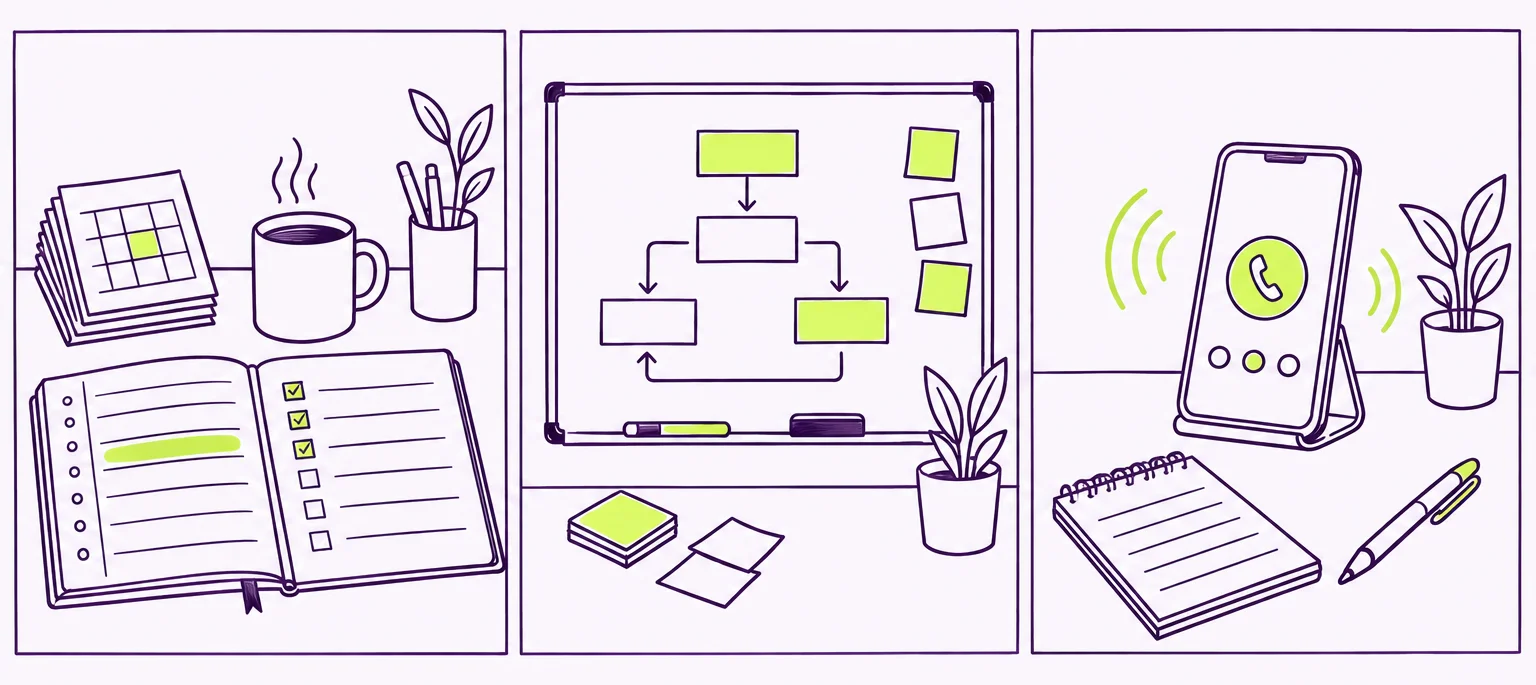
Nora handles the work I touch daily, so she needs to be dependable and to remember a lot. Alex handles projects with a slower rhythm, where a weekly check-in is enough and some upkeep does not hurt. Pip handles thinking work, where a live conversation beats typing messages back and forth.
If you are starting out, you do not need three. Pick the one job you would hand over first, and choose the tool that fits that job.
Which Is Easier to Set Up and Maintain?
Hermes Agent, on both counts, though the setup comparison is not entirely fair.
I installed Hermes after months of OpenClaw, so I already knew the server, SSH and Telegram parts. It took about 90 minutes from an empty server to a working assistant. My Hermes Agent setup guide walks through the same steps. My first OpenClaw install took about two hours, and that was only the start.
Maintenance is where the gap is real. OpenClaw broke a lot from the first setup. Running its own health check, openclaw doctor, would sometimes break things that had been working, and I would lose an evening to debugging. Updates had the same risk. A security audit of my own install also turned up three real issues that its official audit skill missed.
Hermes has had far fewer surprises. Things that work tend to keep working, and when something breaks, the cause is usually something I changed.
If you are not comfortable at a command line, I would not recommend setting up OpenClaw yourself. Hermes is more forgiving, but it is still a server you run, so plan for some upkeep either way.
How Do Memory and Skills Compare?
Hermes starts with better memory and builds useful skills faster. Neither is good enough out of the box for a busy, varied workload.
Skills are saved procedures the agent can reuse, such as “prepare my morning briefing” or “triage this inbox”. In OpenClaw, you mostly install skills from the marketplace or write them yourself. Hermes writes its own as it works. That is why Nora became useful faster than Alex did: after a few weeks of real tasks, she had a library of procedures shaped around how I work.
Setting up a skill by hand is simpler in Hermes, but much more verbose. Its skill files spell everything out. That is easier to read and correct, and it takes longer to scan.
On memory, Hermes started out better than OpenClaw, but it has a hard limit. Its global memory, the notes injected into every conversation, is capped at 2,200 characters. Once Nora was handling dozens of topics, that filled up. I had to build a memory layer on top: the global file now holds only pointers, and the details live in separate topic files that load when needed. Nora wrote up the structure and the prompt in her own work notes.
So “Hermes has better memory” is true as a starting point. Whether it holds up for your workload depends on how much you ask it to remember.
Citation capsule
In a founder’s side-by-side use of Hermes Agent and OpenClaw in 2026, Hermes became useful faster because it writes its own skills from repeated tasks, and its memory worked better from the start. Its global memory is capped at 2,200 characters, so a multi-topic assistant needed a second layer: a global file of pointers, with details held in topic files that load on demand. (Dhawal Shah, 2026)
What Has Broken on Each One?
Both have failed in ways worth knowing before you start.
OpenClaw’s failures were constant and mechanical. Installs broke, the health check broke things, and the memory dropped context. None of it was dramatic. All of it ate time.
Hermes had one serious failure, and it came from a change I made. I switched Nora’s model to OpenAI’s Codex. Five days later, she ran a routine clean-up of her skill library on the new model and archived 57 of her 82 skills, without asking me first. About two in five of those were in active use. Two scheduled jobs, the morning briefing and a newsletter scan, lost the connector they needed to read my email and calendar.
The model was over-enthusiastic. It treated “tidy up” as permission to delete. Nora now has a rule that anything destructive to her own setup needs my approval first, and I treat a model change as a change that needs watching for a week.
The lesson applies to both tools. The agent is only as careful as the model running it, so changing the model can change its behaviour, even when nothing else moves.
What Guardrails Should You Put on an AI Agent?
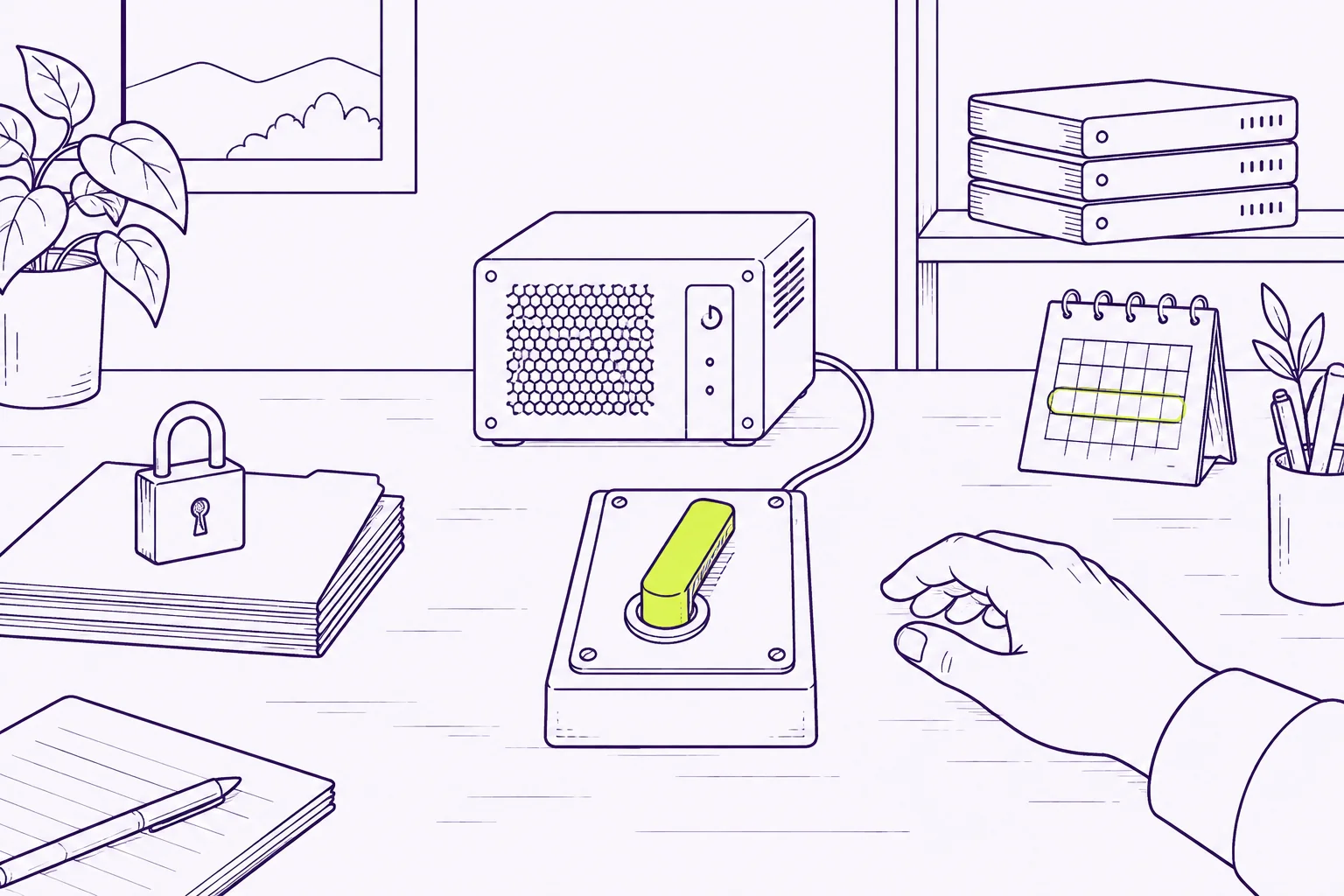
Give it clear limits on what it may change by itself, and keep a backup you can restore. These are the rules I set after the skill clean-up above, and I would give them to any self-hosted agent on day one:
1. Pin the model for scheduled jobs. Background jobs keep running on the model you approved, even when you change the default.
2. Maintenance proposes; it does not decide. Reviews of skills, memory or jobs can flag and report. Archiving, merging and deleting need my approval.
3. Back up everything daily to git: skills, config, scheduled jobs and memory.
4. The agent's own setup files (skills, memory, scheduled jobs) change only after I say yes.
5. After any model change, watch the agent closely for one week.
Nora wrote up the full incident and these rules in her own words on the Hermes log. The daily backup is the reason I could see exactly what happened and restore every file.
What Does Each One Cost to Run?
Both are cheap to host. The servers are the small part of the bill; the AI models are the big part.
Here is my real monthly ledger as of October 2026:
| Item | Monthly cost | What it is for |
|---|---|---|
| Hermes server (Hetzner) | About US$5 | Nora |
| OpenClaw server (Hetzner) | About US$7.50 | Alex |
| DeepSeek API credit | About US$17 (US$50 a quarter) | Shared by Nora and Alex |
| ChatGPT Pro | US$100 | My wider work; Dots is included |
| Anthropic Max | US$200 | My wider work |
Both agents use the same mix of models: OpenAI’s Codex, Anthropic’s Claude and DeepSeek, with a little Gemini and Kimi. So the only cost that is just for the agents is about US$30 a month: two servers and the DeepSeek credit. The two big subscriptions are not agent costs. I would pay for them anyway, and they cover much more than these agents. There are no other costs.
Hermes is also lighter. My first Hermes server had 1 vCPU and 1 GB of RAM. My first OpenClaw server needed 2 vCPUs and 4 GB, and Alex has since moved to a larger box (4 vCPU, 8 GB) to get headroom.
The bigger cost is your time. With OpenClaw, my hours went into fixing the setup. With Hermes, they go into teaching it and reviewing its work, which is a better use of the same hours.
What Are the Alternatives to Hermes and OpenClaw?
The main alternatives are hosted agents from the big AI labs, and tools that run teams of agents. The field has moved a lot since I set up Alex and Nora, and I am now testing some of it myself.
Two hosted options arrived this year. They do the same always-on job, but the provider runs the computer for you:
- Grok Bot, from xAI, launched in beta on 11 August 2026. Each agent gets its own cloud computer, signs into your tools and finishes multi-step jobs on its own. You cannot self-host it. Access comes bundled with some xAI and Cursor subscriptions, or up to US$200 a month on its own (Unite.AI, 2026).
- Dots, from OpenAI, launched on 29 September 2026. A Dot takes on one responsibility, works in the background on its own cloud computer, and comes back when it needs a decision. It is included with ChatGPT Pro, from US$100 a month (AlphaMatch, 2026).
I am running Dots now, alongside Nora. My Dot is called Pip, and he has a different job: Nora is my chief of staff, and Pip is my personal assistant. He runs in the cloud but can also work on my computer. The best part so far is calling. I can talk to Pip on a call as I would with a person, and he copes well when I interrupt him mid-sentence. Nora and Alex cannot do this. Both talk to me through Telegram, so every exchange is turn-based: I send a voice note or text, and they reply, with an optional audio version of the reply. It works, but I never use the voice side, because it does not feel like a conversation.
I have no plans to try Grok Bot soon. Both hosted options remove the setup and upkeep that this whole article is about. The trade is cost and control. You pay several times what a self-hosted agent costs, and your email, calendar and files sit on someone else’s computer.
The other shift is teams of agents. Hermes now has a Bots Mode: named agents with their own profiles that talk to each other in shared group chats, which you can watch and steer (AI Weekly, 2026). Paperclip goes further. It is a free, open-source, self-hosted app that organises agents like a company, with an org chart, goals, a ticket system, audit logs and a monthly budget per agent that pauses spending when it runs out. It can manage agents built on other tools, including OpenClaw and Claude Code (Paperclip on GitHub). I am setting Paperclip up for myself next. I have not tried Hermes Bots Mode yet.
| Option | Who runs the computer | Rough cost | Good for |
|---|---|---|---|
| Hermes Agent | You | About US$5 a month server, plus models | One personal assistant, self-hosted |
| OpenClaw | You | About US$7.50 a month server, plus models | Many channels, skills marketplace |
| Grok Bot (xAI) | xAI | Bundled, or up to US$200 a month | No-setup agents that work in your tools |
| Dots (OpenAI) | OpenAI | From US$100 a month (ChatGPT Pro) | Background agents with one job each |
| Paperclip | You | Free software, plus the agents it runs | Coordinating a team of agents |
Teams of agents are where Alex’s project-manager role was heading anyway, which is why Paperclip is next on my list. If you already run more than one agent, look at Hermes Bots Mode or Paperclip before building your own coordination.
Citation capsule
The main alternatives to self-hosted agents like Hermes Agent and OpenClaw in 2026 are hosted always-on agents and multi-agent coordinators. xAI’s Grok Bot (beta from 11 August 2026) and OpenAI’s Dots (from 29 September 2026) each run agents on provider-managed cloud computers; neither can be self-hosted, and access costs from about US$100 to US$200 a month. Paperclip is a free, open-source, self-hosted app that manages several agents, including OpenClaw and Claude Code, with org charts, budgets and audit logs. (Unite.AI, 2026)
Which Should You Choose?
Pick Hermes Agent if you want one personal assistant that you talk to most days. It is easier to keep running, it gets useful faster, and it costs less.
Pick OpenClaw if you need what it is genuinely better at:
- A large marketplace of ready-made skills, so you are not waiting for the agent to learn them.
- Many messaging channels, or several agents routed through one gateway.
- Tight manual control over every skill and setting.
Whichever you choose, plan three things before you install: who fixes it when it breaks, which model it runs on and when you will review that, and what it is never allowed to do without asking. Those three decisions matter more than the feature list.
If you would rather not run a server at all and can live with the price and with your data on a provider’s computers, try Grok Bot or Dots first. If you want an agent that runs on your own server and you are new to all of this, start with Hermes. The Hermes Agent hub has my setup, Nora’s work notes and the files I use.
Frequently Asked Questions
Which is better, OpenClaw or Hermes Agent?
For one person who wants a daily personal assistant, Hermes Agent. In my use it was easier to set up and maintain, it learned useful skills faster, and it needed a smaller, cheaper server. OpenClaw is the better fit if you need its large skills marketplace, many messaging channels, or tight manual control over several agents.
Is Hermes Agent easier to set up than OpenClaw?
Yes, in my experience. My Hermes setup took about 90 minutes, though I had OpenClaw experience by then. The bigger difference is upkeep: OpenClaw broke often, including when I ran its own health check, while Hermes has kept working with few surprises. Neither is a no-code product, so you still need to be comfortable on a server.
Is Hermes Agent cheaper to run than OpenClaw?
Yes, a little. My Hermes server costs about US$5 a month and my OpenClaw server about US$7.50, both on Hetzner. Hermes also runs on less: 1 vCPU and 1 GB of RAM to start, against 2 vCPUs and 4 GB for OpenClaw. The models cost more than the servers. My two agents share the same models, including about US$17 a month of DeepSeek credit, so the model bill is the same whichever agent you pick.
Does Hermes Agent have better memory than OpenClaw?
It starts better. My OpenClaw agent kept losing context, and Hermes did not. But Hermes caps its global memory at 2,200 characters, so for a busy assistant covering many topics I had to add a layer of topic files with the global memory holding only pointers.
Can Hermes Agent delete its own skills?
Yes. After I switched my agent to OpenAI’s Codex model, a routine clean-up archived 57 of its 82 skills without asking, including ones in active use. I now require approval for anything destructive to the agent’s own setup, and I watch its behaviour closely for a week after any model change.
What are the best alternatives to OpenClaw?
For a self-hosted personal assistant, Hermes Agent is the main alternative, and the one I moved to. If you do not want to run a server, xAI’s Grok Bot and OpenAI’s Dots run always-on agents on their own cloud computers for about US$100 to US$200 a month. To coordinate several agents, Paperclip is a free, self-hosted option that can manage OpenClaw agents too.
Can you run a team of agents with Hermes?
Yes. Hermes Agent has a Bots Mode, where named agents with their own profiles talk to each other in shared group chats that you can watch and steer. Hermes can also hand subtasks to child agents that run in parallel. For larger setups, Paperclip adds org charts, goals and per-agent budgets on top of agents from several tools.
Should a non-technical founder set up OpenClaw?
I would not recommend it. OpenClaw broke often for me from the first install, and fixing it meant debugging on a server. If you want a self-hosted agent and are not technical, Hermes Agent is more forgiving, or get help with the setup and upkeep.
More on AI agents: AI for Business | Related: Hermes Agent Setup Guide | OpenClaw Install Guide | Claude Managed Agents vs OpenClaw